From Wheelchair to Ultra-Endurance
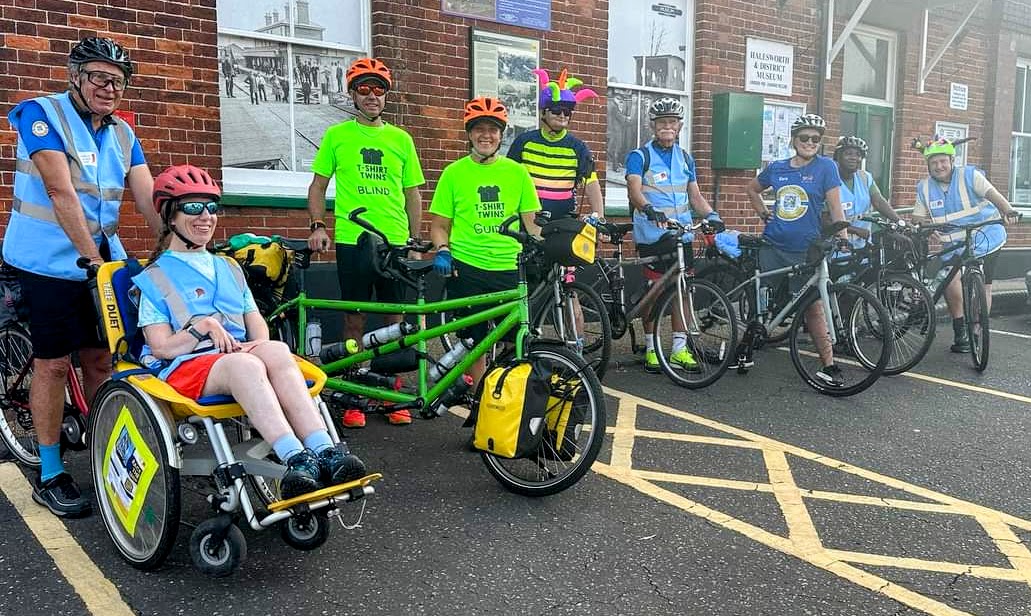
In December 2022 I was ending my 19th year as a full-time wheelchair user. Three months earlier I'd been up Snowdon in that wheelchair for Pulling Together Up Snowdon. On June 16, 2023, I rode the BHF London to Brighton — 54 miles in 4 hours 45 minutes on an old self-adapted hybrid bike. Three months after that I rode 197 miles over 4.5 days from Great Yarmouth to London for Race the Ship. I clocked 1,800 miles that year. I'd begun 2023 having to rebuild my leg muscles, learning how to adapt my bike so I could ride with my physical constraints.
I Shouldn't Be Here. I Am.
For most of my adult life, I was told what I couldn't do. By doctors, by specialists, by a body with 360,000 lifetime dislocations and a pharmacological profile that should have killed me.
I spent over two decades in a wheelchair. I was surviving on an escalating stack of opiates: fentanyl, methadone, morphine, OxyContin, at doses that kept me near-comatose around the clock. In 2019, I faced a binary choice: stop all of it, or don't make it to the following year.
The detox took 256 days. No shortcuts. Reducing 10% at a time, with continuous withdrawal symptoms comparable to cold turkey heroin, stretched across eight months. I lost eight stone in nine months. I came out the other side with better pain control than I had on the strongest medications medicine could prescribe.
I can't take oral medication. My gut doesn't absorb nutrients reliably. I manage one of the most complex multi-system physiological profiles in endurance sport: Classical Ehlers-Danlos Syndrome, dysautonomia, CRPS, gastroparesis, structural baroreflex failure, coronary heart disease, and narcolepsy among them, and I ride anyway. Not despite the pain. Within it.
In under two years at 58 years old, I took my VO2 max from 30 to 55. My resting blood pressure from 198/141 to 108/61.
The medical system failed me for decades. Cycling didn't.